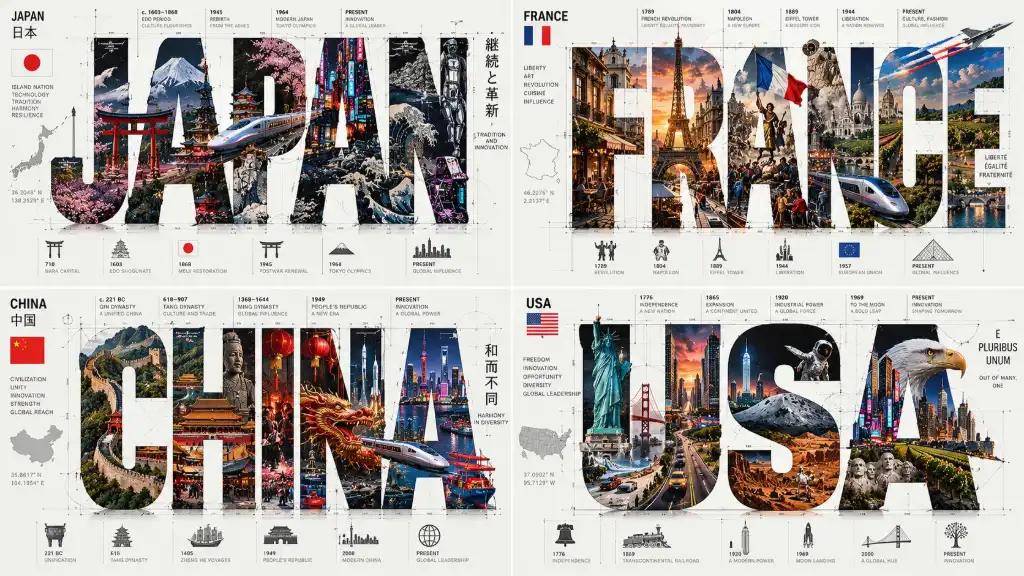
Create a conceptual typographic illustration for [SUBJECT].
Research the subject and identify:
its shortest recognizable name,
most important date or period,
defining event,
one iconic object,
and the dominant force or movement associated with it.
Build the subject inside its name, rather than illustrating it beside the text.
Render the name in enormous, condensed black capital letters. Treat each letter as architecture, landscape, machine, timeline, and stage. Roads, crowds, buildings, vehicles, landmarks, waves, cracks, machines, or tiny figures may travel through, occupy, reshape, or replace parts of the letters.
Turn the defining event into a physical force that changes the typography:
explosion → fracture,
collapse → broken baseline,
migration → figures crossing letters,
flight → aerodynamic paths,
growth → stretched forms,
unification → separate letters interlocking.
Include one iconic 3D object that physically interacts with the word—inside a letter, crossing a stroke, replacing part of a glyph, emerging from a crack, or casting a realistic shadow.
Surround the typography with a restrained industrial identity-manual system: thin measurement lines, structural axes, trajectories, dates, angles, dimensions, and 6–14 meaningful technical annotations.
Add a small historical timeline with 3–6 subject-specific milestones.
Style:
Swiss / International typography × aerospace manual × architectural drawing × museum identity × miniature diorama × mid-century corporate design.
Use a white or pale-gray background, monumental black typography, one subject-specific accent color, and extremely thin technical lines.
Keep the word at least 85% readable.
The final image should feel like a lost industrial design document in which the subject's name becomes a functioning miniature world, and its history physically transforms the letters themselves.